EEBUSummit 2026: testing enbility's EEBUS stack live at the Plugfest
Thomas Müller3 min read
At the EEBUSummit and Plugfest 2026 in Cologne, the enbility consortium tested its open source EEBUS stack in Go live against other EEBUS implementations.
The EEBUSummit & Plugfest, organised by the EEBus Initiative e.V., took place on 30 September and 1 October 2026 in Cologne. While the summit programme covered standardisation, certification and cybersecurity on day one and grid and flexibility use cases on day two, the Plugfest ran in parallel in the Living Lab Cologne: manufacturers bring their EEBUS implementations and test them end to end against each other — from the smart meter gateway to energy managers, inverters, wallboxes and heat pumps.
Representatives of all members of the enbility consortium met there, a few days after the relaunch, to put eebus-go, spine-go and ship-go to the test where it counts: against devices and stacks we did not write ourselves.
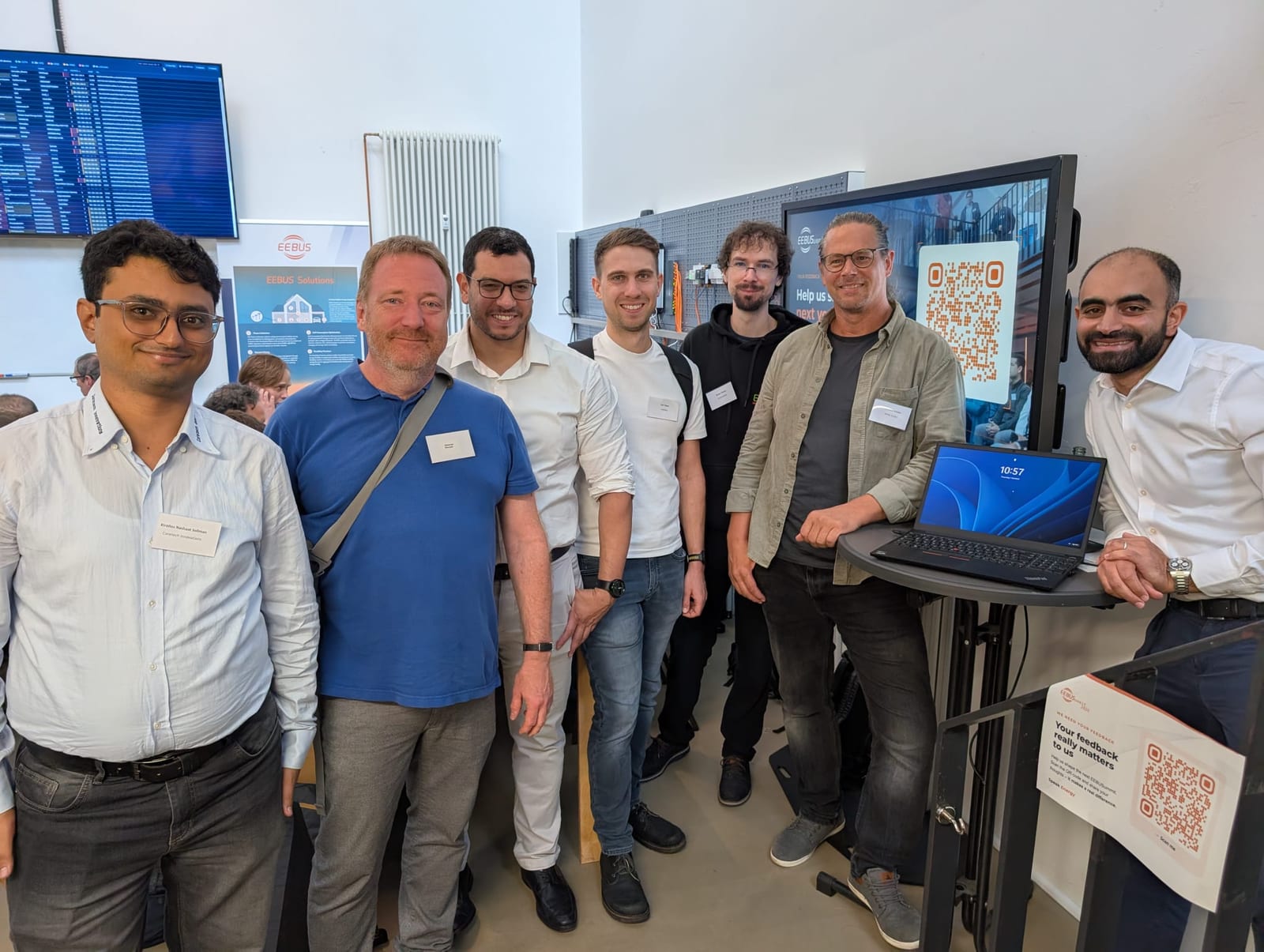
What is the EEBUS Plugfest?
A plugfest is a meeting where manufacturers connect their implementations of a protocol to each other and check whether they really interoperate. The EEBUS specification describes how devices should talk; a plugfest shows whether two independent implementations actually understand each other. At the EEBUS Plugfest, different test tables cover the chain from the smart meter gateway down to end devices, and all test results are documented.
What did we test?
- Use cases across device types: we ran a wide range of EEBUS use cases between the enbility stack and other implementations.
- SHIP pairing in practice: we demonstrated SHIP pairing between devices — the step in which two devices find each other on the local network, establish a mutually authenticated connection and become trusted partners. ship-go implements the Ship Pairing Service (SPS) of the EEBUS specification.
- Interoperability with other stacks: testing against independent implementations is the most reliable way to find gaps — in our code, in other implementations and in the specification itself. What we found will go back into the libraries as issues and fixes.
Why do plugfests matter for an open source EEBUS stack?
Heat pumps, wallboxes, PV inverters, battery storage and energy managers from different manufacturers have to work together on the local network — and, under § 14a EnWG and § 9 EEG, follow grid-control signals reliably. Interoperability does not come from a specification alone. It comes from implementations being tested against each other, again and again.
An open protocol lives on open implementations. An open source stack makes interoperability verifiable: every manufacturer, test lab and grid operator can read how a use case is implemented, reproduce a problem and contribute a fix. The Plugfest is where that openness meets real devices.
Just as valuable as the test results were the conversations: with manufacturers, integrators and the developers of other EEBUS implementations. Interoperability is becoming everyday practice rather than an aspiration.
Thank you, EEBUS Initiative
Many thanks to the EEBus Initiative e.V. for making the EEBUSummit and Plugfest possible — and for creating a place where implementations meet in practice, not just on paper.
How can I get involved?
- Use the stack: start with eebus-go and the Code page.
- Report interoperability issues: findings from your own tests belong in the issue tracker; questions go to GitHub Discussions.
- Meet us at the next plugfest: if you are testing an EEBUS device and want to try it against enbility, get in touch.
Follow the project, read the code and talk to the maintainers: