Use casesv0.7.0
eebus-go
Use-case layer. Register what your device is — EV charger, heat pump, monitored grid connection point — and the library handles the SPINE conversation behind it.
- Commits
- 1,172
- Last commit
enbility maintains the Go implementations of SHIP and SPINE that let heat pumps, wallboxes, inverters and energy managers speak EEBUS — openly licensed, independently auditable, and in production today.
 Protocol stack
enbility is stewarded jointly by Coretech Innovations, EnQS, Kai Takac, Kontron eSystems and SPiNE — a carrier organisation committed to keeping the stack alive independently of any one company, building on the libraries Andreas Linde wrote and released in December 2022.
Meet the consortiumEEBUS is how German energy assets are meant to coordinate under §14a EnWG and §9 EEG. A closed stack makes that coordination unverifiable. enbility keeps one implementation that any manufacturer, grid operator or auditor can read, test and fix.
How EEBUS worksAdd eebus-go to your project, generate a device certificate, register the use cases your product supports, and pair against a real controller. The examples in the repository cover both ends.
Getting startedCode
Three layers, each usable on its own. Most products only ever import the top one.
Use-case layer. Register what your device is — EV charger, heat pump, monitored grid connection point — and the library handles the SPINE conversation behind it.
The data model. SPINE 1.3 of the EEBUS specification: entities, features, function types and the subscription and binding machinery that moves values between them.
Transport and trust. Certificates, mDNS discovery, the WebSocket connection, pairing and the SHIP handshake that two devices complete before they exchange a single value.
Consortium
Each partner builds products that depend on EEBUS working properly. That is the whole governance model: the people who need the stack maintain it.
 Company
Software and hardware for smart metering systems and energy assets in the German market — including the EnergyLink One gateway, which speaks EEBUS to SMGW, controlboxes, heat pumps, PV, storage and wallboxes on site.
Read more Company
 Company
Independent development and testing partner for connected energy management and IoT systems. Combines software engineering and interoperability expertise with hands-on testing.
Read more Company
Kai Takac, a member in a personal capacity rather than through a company — and Andreas Linde, who wrote the libraries and released them in December 2022.
Read more
 — the open-source home energy manager, on enbility since 2022.and many more...
Beyond code
The libraries are free, and nobody sells them. What the consortium members do sell are the products and services around them — certified hardware, test capacity and implementation work.
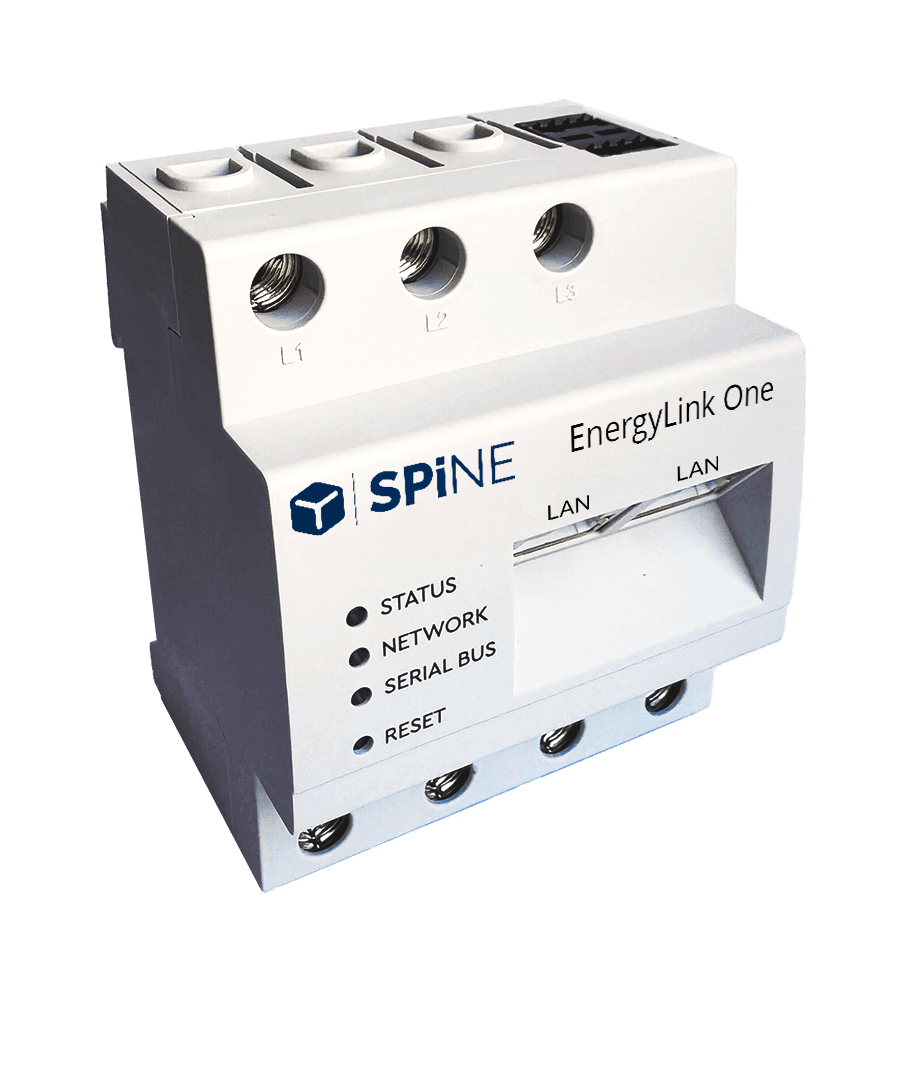
The first box officailly qualified with the enbility EEBUS stack: limitation of power consumption and production in both roles — as the controllable system (CS/HEMS) and as the energy guard (EG, the German Steuerbox) — plus power and grid connection point monitoring and SHIP pairing. It runs alongside a local HEMS such as evcc, connects to a cloud HEMS, or is extended with your own applications and connectors through the SDK.
Coretech helps manufacturers bring EEBUS into real products with deployment-ready eebus-go packages and extensive off-the-shelf use-case support, complemented by EEBUS simulation and automation, pre-qualification software, and training and technical consultation.
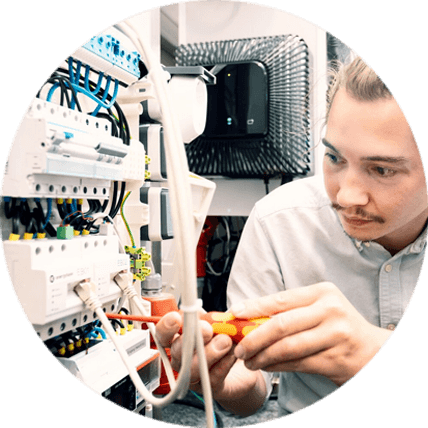
A lab wired with real PV systems, battery storage, wallboxes and test smart meter gateways, reachable over VPN — where an EEBUS implementation or integration meets hardware that behaves like hardware, not like a simulator.
Two layers. SHIP finds the other device on the local network, establishes a mutually authenticated TLS connection and completes a pairing the user confirms once. SPINE then describes what each device is and what it can do, so a wallbox and an energy manager negotiate a charging limit without either having been built for the other.
A working implementation of the parts that are tedious to get right — certificate handling, discovery, the handshake state machine, the SPINE model — plus a set of ready use cases covering EV charging, self-consumption optimisation and power limitation. You implement your device’s behaviour, not the protocol.
Blog
At the EEBUSummit and Plugfest 2026 in Cologne, the enbility consortium tested its open source EEBUS stack in Go live against other EEBUS implementations.
Thomas Müller28 September 2026enbility has relaunched: a new website and a five-member consortium now maintain eebus-go, spine-go and ship-go, the open source EEBUS implementation in Go.
Thomas Müller23 December 2025Over the past months, some in the community have asked whether enbility and the go-eebus stack are still actively maintained and what its future looks like. We want to be very clear:
Thomas MüllerStart with the examples in the repository. If you get stuck, the consortium reads the issue tracker — and several partners offer commercial support around it.